From source
to end user.
Connecting supply with industrial demand through pipeline and distributed gas infrastructure.
- Supply
- Distribution
- Industry
Pipeline · CNG · LNG · Pressure reduction · Metering
Explore natural gas Discuss a project
We help clients define, engineer and deliver practical energy infrastructure.
Explore our expertise Discuss a project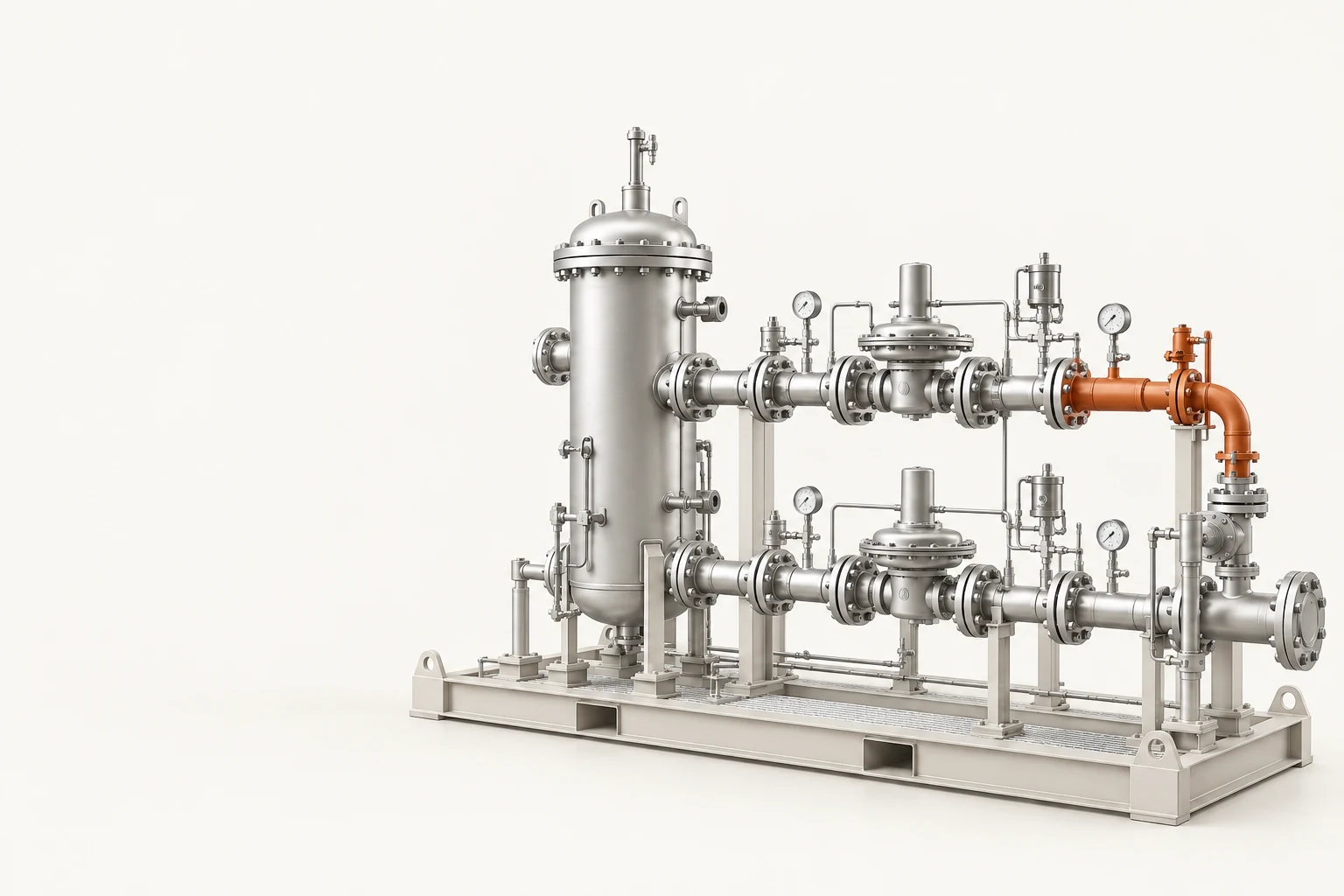
Physical infrastructure and operational intelligence, considered together.
Connecting supply with industrial demand through pipeline and distributed gas infrastructure.
Connecting supply with industrial demand through pipeline and distributed gas infrastructure.
Pipeline · CNG · LNG · Pressure reduction · Metering
Explore natural gasConsidering storage, handling and distribution as one integrated operating system.
Transfer · Metering · Loading · Fire protection · Control
Explore petroleumConnecting field instrumentation, control and operational information with the people who use it.
Instrumentation · Connectivity · Automation · Monitoring
Explore digital systemsSupply is only one part of the equation. How do you connect it to the industries that need it?
Explore three supply pathways. Each connects a different infrastructure system to the same end use.
Discuss your gas opportunityGas is compressed for transport, then its pressure is reduced and its delivery metered at the receiving site.
Gas is compressed for transport, then its pressure is reduced and its delivery metered at the receiving site.
Gas is cooled into liquid for transport, then returned to gas through regasification before delivery to the industrial user.
A pipeline connects supply to the receiving facility, with pressure regulation and metering suited to the end use.
Route selection depends on demand, distance, supply access and site conditions. These diagrams simplify the full system.
Learn about CNG and LNG from the U.S. Department of Energy ↗, and liquefaction and regasification from the U.S. EIA ↗.
Consider the supply route, receiving facility and industrial application as one system.
A clear pathway through each stage of an infrastructure project.
Understand the demand, test the concept and establish what a practical project needs to deliver.
Understand the demand, test the concept and establish what a practical project needs to deliver.
Translate project requirements into a coordinated design, with clear specifications and interfaces between systems.
Connect procurement support, installation, testing and commissioning with the requirements of the project.
Support reliable operation through maintenance, training and technical assistance, informed by the needs of the facility.
Our starting point is the opportunity in Tanzania’s energy infrastructure. Our focus is making it practical.
We bring engineering, procurement support, installation and operations into a coherent project approach—connecting technical decisions with real operating needs.
More about APICALUnderstand the operating environment.
Make the technical choices understandable.
Consider the infrastructure as a whole.
Bring us an opportunity,
a technical challenge
or an operating problem.